
Glovo, Bolt Food, and Wolt have solved a real problem for restaurants: visibility in front of a large audience, without any investment in digital marketing. For a new restaurant, or one looking to test delivery, access to a large base of active users is an advantage that is hard to ignore. Aggregators exist for a good reason.
The problem for restaurants arises when aggregators become the only online ordering channel. High commissions reduce the profit margin per order, customer data remains the property of the platform rather than the restaurant, and the relationship with the customer is mediated by an intermediary you do not control. According to a survey cited by Techryde, 65% of restaurant operators say that aggregator delivery fees have significantly affected their profitability, and 40% say that reducing third-party commissions is one of their priorities for 2026.
Building an alternative to aggregators does not mean abandoning them overnight. It means building your own direct ordering channel in parallel, gradually drawing customers towards it, and reducing dependency at your own pace. This article explains exactly how you can create an alternative to aggregators: from the first steps in building your own channel, to the strategies that motivate customers to order direct, through to managing the transition without losing volume during the changeover.
Why Customers Would Choose to Order Direct
Before building an alternative to aggregators, it is worth understanding what motivates customers to change their behaviour. The convenience that aggregators offer is real: the app is already installed, the card is saved, the order history is there, all in one place, and you can place the order from home, from the office, or from wherever you happen to be. For a customer to order directly from you, your experience needs to be at least as simple.
The data shows there is real potential for direct ordering channels. Techryde reports that 70% of consumers aged 18 to 45 use direct ordering channels when they are available and easy to use. 55% of customers say they prefer to order where pricing is transparent, with no hidden service fees or unexpected charges added at checkout. And 40% of delivery customers say they would order more often if the direct ordering experience were as smooth as on third-party platforms.
The key phrase is “as smooth.” The alternative to aggregators does not necessarily win through more arguments, but through the experience it offers the customer.
Step 1: Build Your Own Online Ordering Channels
The first condition for reducing dependency on aggregators is the existence of an accessible alternative. Without your own ordering channel, there is, obviously, nowhere to move customers to.
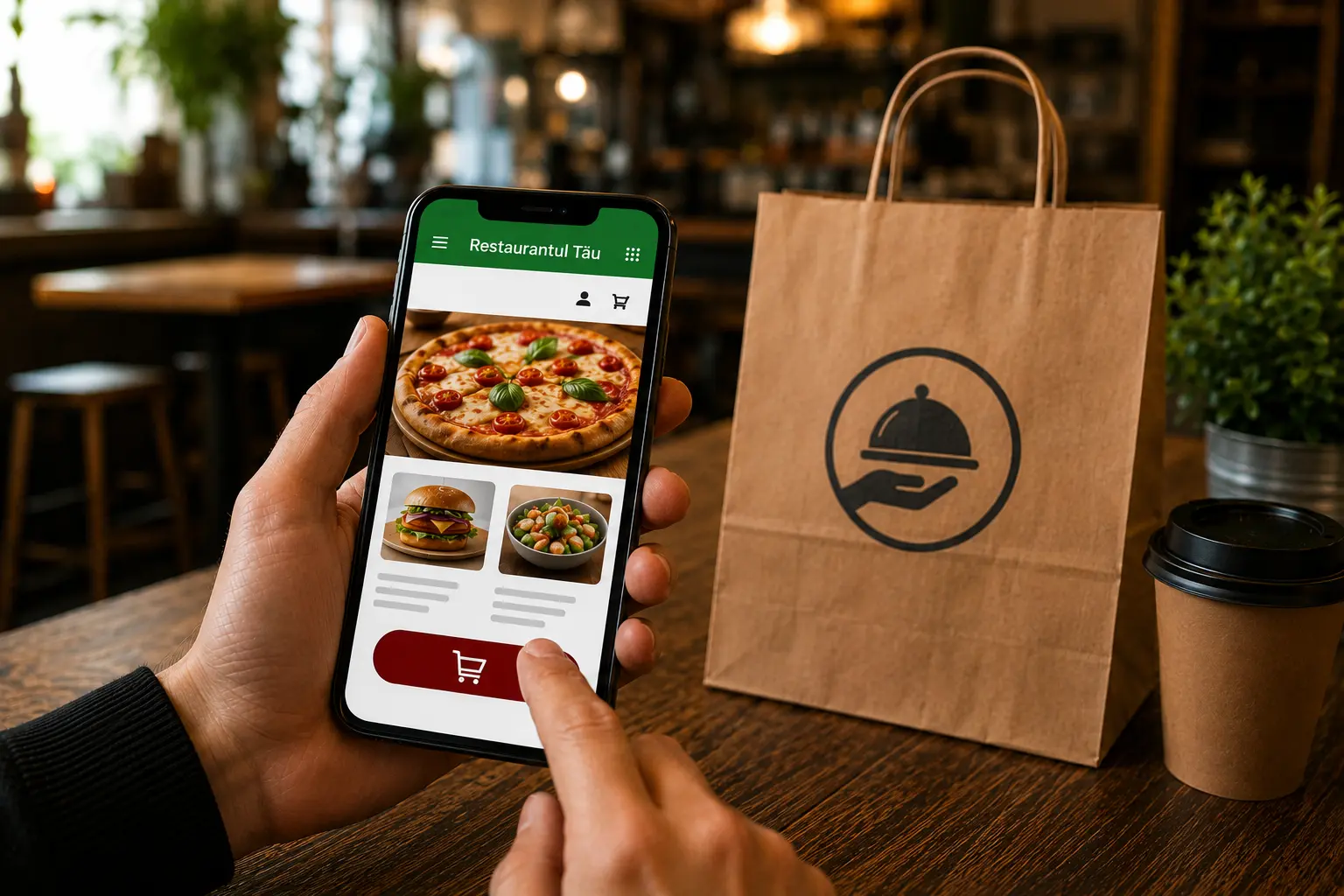
There are two main channels for online orders: a mobile app or a website. The mobile app is the most powerful loyalty tool. The customer downloads it, creates an account, saves their card details and addresses, and repeat orders become faster every time. The app stays on the customer’s phone and, depending on the app, can remind them of your restaurant with every notification. The online ordering website is more accessible for occasional orders, with no need to download an app, and it can bring in organic traffic through local SEO. A customer searching for “pizza delivery” on Google can land directly on your website, rather than on a platform that lists your competitors alongside you.
The TapTasty mobile app and the TapTasty website are built specifically for restaurants, optimised for fast ordering, and integrated with all other operational modules, so an order placed through the app arrives automatically in the POS and the kitchen without any manual input.
Step 2: Make the Transition Simple for the Customer
The most common reason customers do not migrate to the restaurant’s direct channel is not that they do not want to, but that the switch involves too much effort without the customer being told why it is worth making that effort. They have to find the app, download it, create an account, enter their card details, all from scratch. Compared to the aggregator app that is already installed, with an account already set up and card and addresses already saved, the effort is real.
Reducing that friction is your job, not the customer’s. A few concrete ways to do it:
-
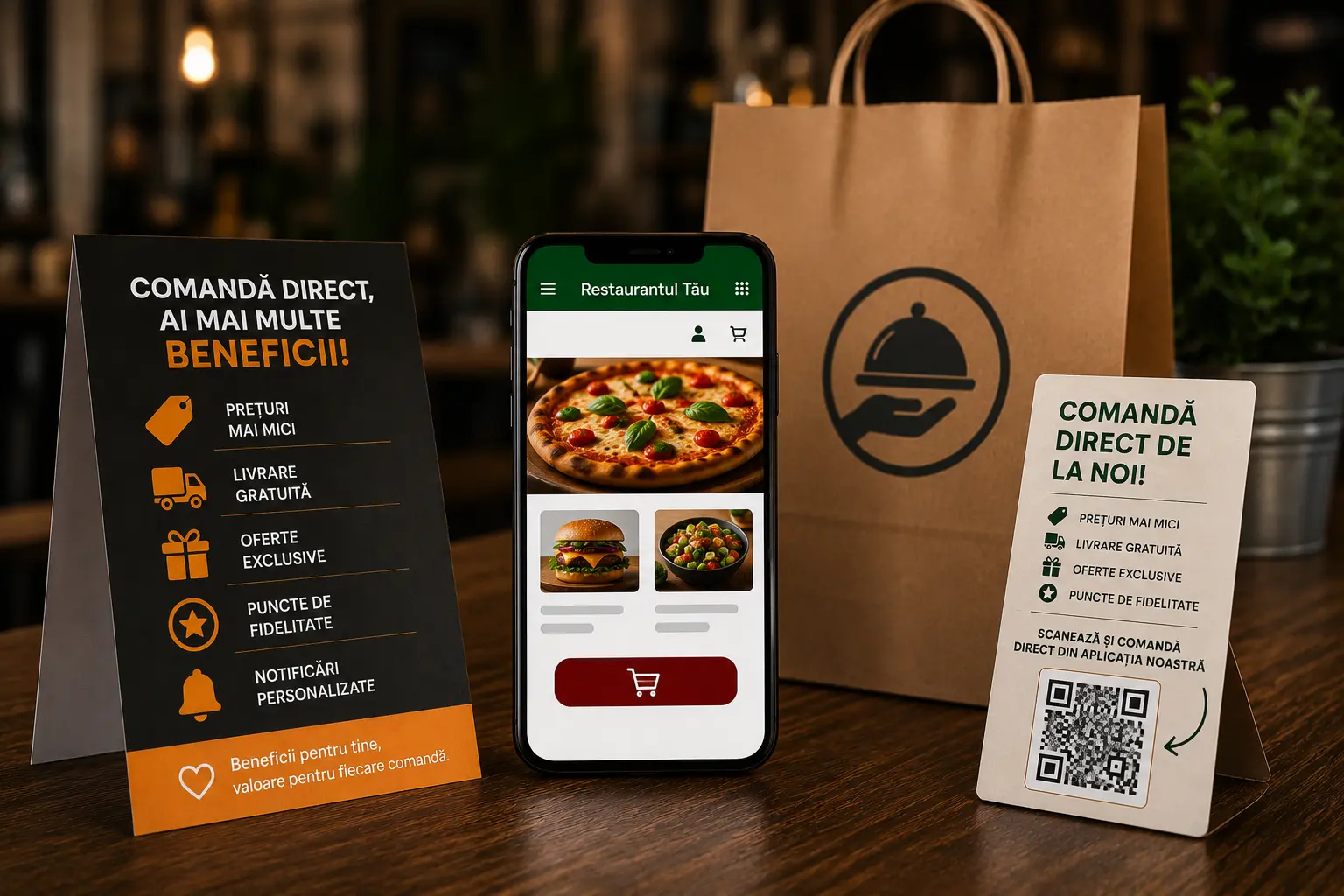
Include a QR code in the delivery bags that leads directly to the ordering page or app download
-
Print leaflets and messages on packaging that simply explain why ordering direct is worth it (no hidden fees, loyalty points, exclusive offers)
-
Send a direct ordering link in the confirmation emails or thank-you messages sent after every aggregator delivery
Sauce notes that operators who have successfully made the transition and built an alternative to aggregators share three things: a dedicated ordering platform, a frictionless checkout flow, and a visible, consistent reason for the customer to choose you directly. The last point is the most important.
Step 3: A Note on Pricing for the Direct Channel
Some aggregators include price parity clauses in their contracts with restaurants, meaning you cannot list a dish more cheaply on your own channel than on the platform. Before adjusting your prices, check the contractual terms with each aggregator.
In any case, if you cannot reduce prices on your own platform, an approach that avoids any contractual conflict is to add more value to direct orders. Free delivery, a free item included with the first app order, or access to an exclusive discount do not change the base price of the dishes, but make the direct order more attractive. The effect perceived by the customer is the same, and the restaurant remains compliant with the platform’s terms.
Step 4: Give Customers a Concrete Reason to Order Direct
The transition does not happen through messages like “Order direct and support your restaurant.” Customers rarely make decisions out of pure altruism. The decision is largely made on the basis of the personal benefit they perceive. What are the most effective tools for creating that benefit? Here are some of them:
Lower prices or free delivery on the direct channel. Although this has already been mentioned, if you can reduce product prices, delivery fees, or any other charges, or even offer a free item, the customer will immediately understand that they have much more to gain by ordering direct. In the short term, these benefits may cost you more, but if you can win new customers and then retain them, in the long run, you have won.
If you want to learn more about loyalty and customer retention, I invite you to read two articles from our blog: Why Customer Retention Matters More Than Acquisition for Restaurants and The Most Effective Loyalty Methods for Restaurants in 2026.
Loyalty points that only accumulate through your own channels. A customer who orders through Glovo gets nothing extra from your restaurant. On the other hand, your own ordering channels like those from TapTasty can offer the customer points that convert into discounts on future orders.
Exclusive offers available only on the website or app: a newly launched dish, a special combo, a discount on the first direct order. These offers are not available on aggregator channels, which gives customers another real reason to download the restaurant’s own app.
Personalised notifications. Do you know a customer has not ordered in 3 weeks? You can send them a reactivation offer directly to their phone, through the app. Aggregators do not allow that. The customer relationship belongs to them, not you. The TapTasty loyalty module and targeted marketing campaigns are the tools that make all of this possible.
The most effective format for the first contact with the ordering alternative you are trying to build is a single, clear, immediate offer. Not a complex programme with multiple steps. “First app order, free delivery” or “Download the app and get a free dessert” are the kinds of messages a customer immediately understands from the promotional materials added to the delivery bag. The complexity comes later, with points programmes and loyalty schemes. At the first interaction, simplicity wins.
Step 5: Use Aggregators as a Discovery Platform
Reducing dependency on aggregators does not necessarily mean eliminating them. Why? Because aggregators are excellent channels for your restaurant’s visibility. A customer who does not know your restaurant exists may order for the first time through Glovo. Your job is to turn them from a platform customer into a restaurant customer. The methods for doing this have already been covered above.
The transition is not from 100% aggregator to 0% aggregator. It is from 90% aggregator and 10% direct, to 60-40, to 50-50, at the restaurant’s own pace. Every percentage point moved to the direct channel means better profit margin and a customer you know better.
A common mistake at this stage is reducing visibility on aggregators before the direct order volume is solid enough. If you pull back from platform promotion too early, total order volume can drop, which affects both cash flow and team morale. The smarter strategy is to maintain your aggregator presence at its current level and grow the direct channel in parallel. The direct share grows organically as more and more customers place their first direct order and repeat it. Only when you exceed 30–40% direct orders is it the right moment to review whether you adjust your promotion budgets on the platforms.
Step 6: Centralise All Orders in One System
As you build your own channels, you simultaneously have orders coming in from the app, the website, and aggregators. Without a centralisation system, this means multiple tablets, separate workflows, and an increased risk of kitchen errors.
Integrating aggregators with the same POS that manages direct orders resolves this problem. All orders, regardless of source, arrive on the same screen, then on the same KDS, and are managed from the same dashboard. Furthermore, through the TapTasty KDS, the kitchen also knows where orders are coming from, whether they need to be prepared for delivery or not, so everything runs smoothly.
This centralisation is also essential for another reason: it gives you real data about your order mix. How many orders come from the app versus Glovo? Which channel has the higher average check? Which generates more returning customers? Without this data, you cannot make informed decisions about how to accelerate the transition.
How to Measure Whether the Transition Is Working
Here are a few things worth tracking monthly to see whether building an alternative to aggregators has paid off:
-
Share of direct orders in total online orders. If last month 15% of orders came directly and now it is 20%, the transition is moving in the right direction.
-
Customer return rate on the direct channel versus aggregators. Customers who order direct tend to come back more often than those who order exclusively through platforms. If you see this difference in your data, it is a strong argument for investing more in your own channel.
-
Total commissions paid vs. the previous month. As the share of direct orders grows, the total amount paid to aggregators should fall relative to your revenue, even if the total order volume stays the same.
Conclusion
Building an alternative to aggregators is not a one-week project, but a gradual strategy built layer by layer: first the own channels, then the mechanisms for attracting customers to them, then loyalty and direct communication, and finally an integration that manages everything from one place.
Aggregators remain a valid and useful channel, especially for visibility and attracting new customers. But a restaurant that depends exclusively on them for online orders is leaving both margin and the customer relationship on the table. You can read more about the strategic logic behind this decision in the article on marketplace versus your own platform on the TapTasty blog.