
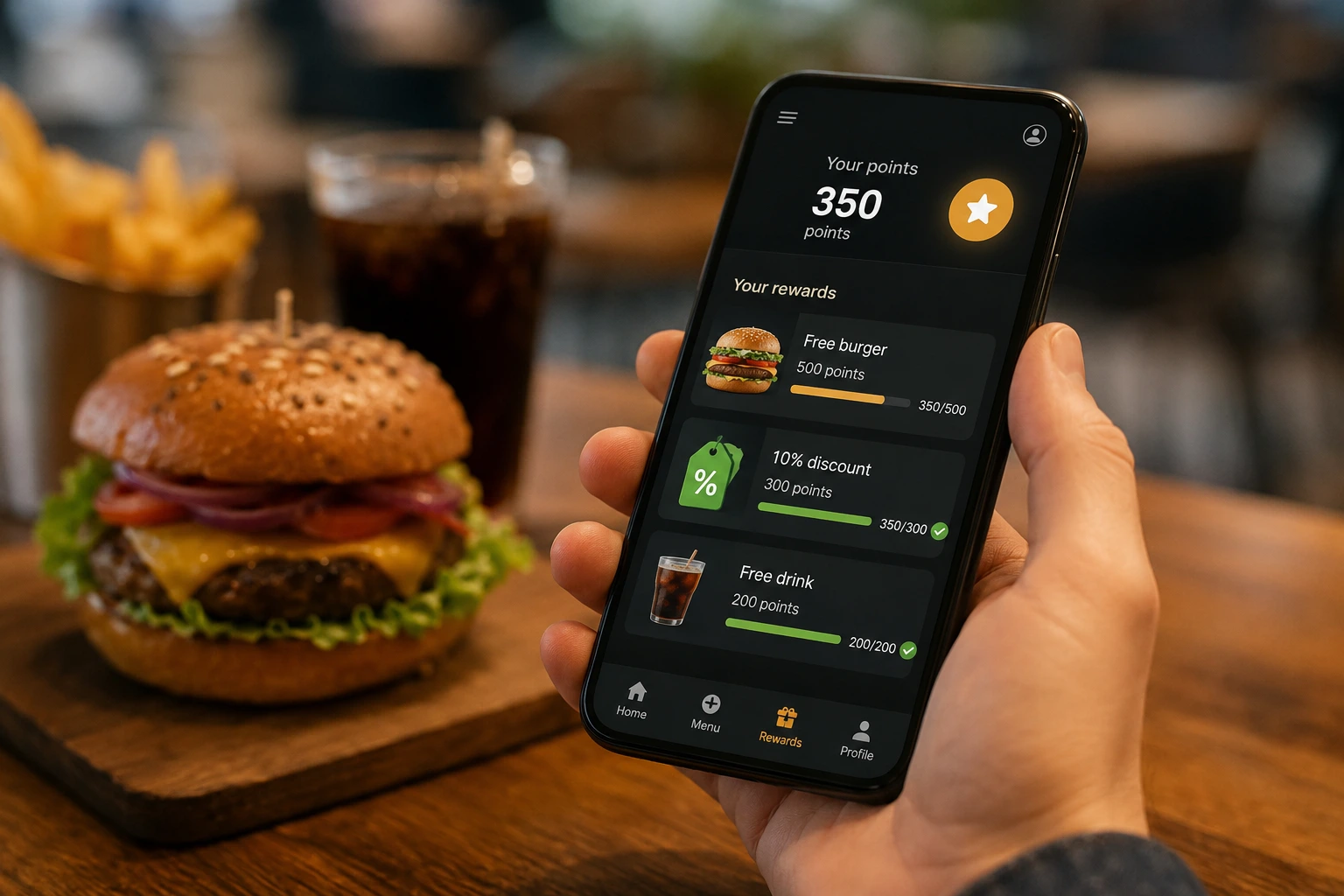
There is a fundamental difference between a customer who comes back because the food is good and a customer who comes back because they have an additional reason to do so. The first is the result of the kitchen. The second is the result of a loyalty strategy that works, one that brings in more returning customers than good food alone ever could.
Loyalty methods for restaurants have diversified far beyond the classic paper stamp card. Today, restaurants have access to digital points programmes, gamification, gift cards, automated reactivation campaigns, referral programmes, and exclusive experiences, each better suited to a different type of restaurant and a different type of customer. According to the Paytronix 2026 Loyalty Report, cited by Restaurant Dive, programmes based exclusively on points are largely obsolete. The most effective loyalty methods for restaurants in 2026 combine reward mechanics with personalisation, gamification, and experiences that create an emotional connection, not just a transactional one.
This article walks through the main loyalty methods for restaurants available today, with clear data on which ones work, for which types of restaurants, and why.
What Makes a Loyalty Method Work
Before getting into the types of programmes, it is worth understanding what the loyalty methods that truly work have in common. The most successful examples from the industry share three traits: they are simple to understand, they offer a tangible reward quickly, and they are accessible through every channel through which the customer interacts with the restaurant.
The most common reason customers abandon a programme is not that the wrong one was chosen, but that the redemption threshold was set too far away. If a customer earns 10 points for every dollar spent, but those points are worth less than 5% of that dollar, they feel like they are accumulating something they will never use. A well-built programme makes the points-to-reward conversion simple and transparent, and the customer genuinely feels rewarded. The balance to strike: the reward must be attractive enough to motivate without being so generous that it erodes the restaurant’s margin.
Equally important, and far less discussed, is the first interaction with the programme. A customer who receives something of value at sign-up, a welcome stamp, a points bonus, a small free item, has a significantly lower dropout rate than one who starts from zero. The feeling of already being on the way matters more than any rule in the programme’s terms and conditions.
The third element that separates effective programmes from invisible ones is integration across all of the restaurant’s touchpoints. If points only accumulate through the restaurant’s mobile app but the customer sometimes orders from the website or directly in the venue, the programme runs at half its potential. The most effective loyalty programme is one the customer does not need to actively remember, because the system reminds them automatically regardless of how they order.
Digital Stamp Cards
Digital stamp card programmes (buy N, get one free) are the simplest and most easily communicated loyalty format. The customer receives a stamp at each visit or qualifying purchase, and after a predefined number earns a reward: a free item, a discount, or an exclusive benefit.
This loyalty method works best for venues with a lower average check and a high visit frequency: fast food, cafés, pizzerias, or fast casual. The ideal threshold for a customer who visits two to three times a month is six to eight stamps, meaning the first reward arrives within two to three months and the sense of progress stays alive throughout. Beyond eight to ten stamps, motivation drops noticeably.
The best delivery format in 2026 is a digital card, not a physical one. Paper cards have a loss rate of 60–70% before the first redemption and generate no customer data whatsoever. The TapTasty loyalty module includes a digital loyalty card integrated directly into the restaurant’s mobile app, available across all sales channels and updated automatically at each stamp collected.
Loyalty Points
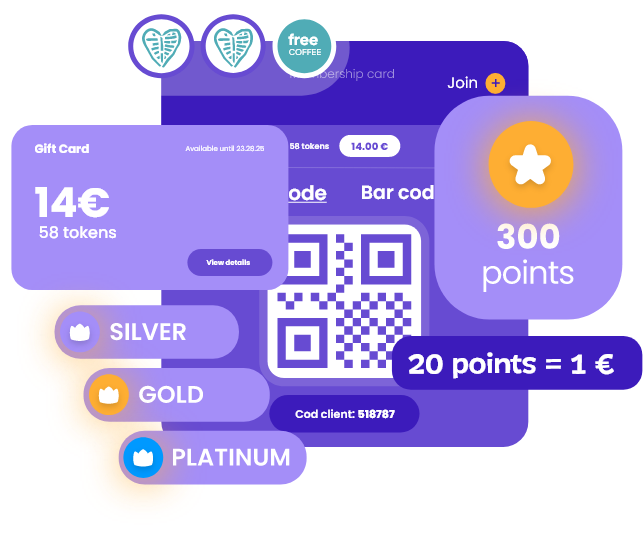
Points-per-dollar-spent programmes are more flexible than stamp cards and better suited to restaurants with a higher average check and a varied menu. The more a customer spends on a single order, the more points they accumulate. It is a simple and fair logic: the restaurant rewards most generously the customers who bring the most value.
The mechanism is straightforward. For every dollar spent, the customer earns a number of points, and those points can later be used to reduce the value of a future order. The more points, the greater the discount. The restaurant sets the conversion rate, how many points equal one dollar off, which lets it calibrate the programme to be attractive for the customer without affecting the margin.
The TapTasty loyalty module includes this type of programme: customers accumulate points regardless of the channel through which they order, whether that is the app, the website, the kiosk, or QR table ordering, and the discount is applied directly in the shopping cart. The points-to-reward conversion must be clear and intuitive from the very first interaction. If you need more than two sentences to explain the programme at the counter, it is too complicated.
Gamification and Contests
Gamification brings game elements into the loyalty experience: time-limited challenges, badges for reaching milestones, missions that reward specific behaviours (a visit during off-peak hours, ordering a new dish, inviting a friend), and contests or prize wheels.
This loyalty method is particularly effective for driving specific behaviours the restaurant wants to encourage. A challenge like “Order three times this week for 500 bonus points” increases visit frequency over a short period. A contest “Leave a review and win a free meal” generates content and online visibility simultaneously. Chipotle Rewards surpassed 30 million members partly through the integration of gamification elements, and industry research attributes high customer retention rates at major QSR brands in part to gamification.
Gamification works best as an additional layer on top of a base programme with points or stamps, not as a standalone method. A prize wheel or contest increases emotional engagement and short-term frequency, but does not replace the recurring reward mechanism that brings the customer back consistently. TapTasty’s contests and prize wheel can be activated directly in the restaurant’s mobile app or on its website.
Gift Cards
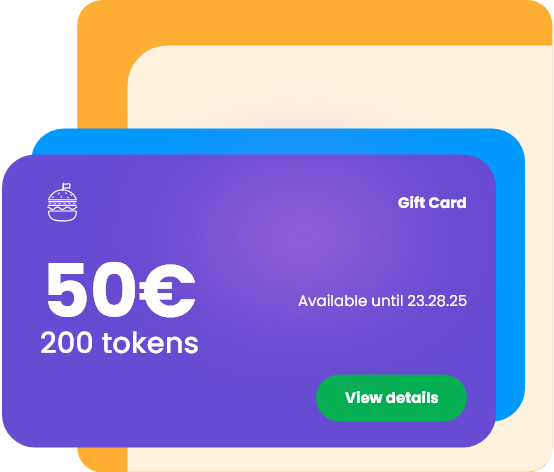
Gift cards are a loyalty method for restaurants that is often underestimated. They do not build loyalty in the traditional sense, but they serve two valuable functions simultaneously: they generate immediate revenue and bring new customers to the restaurant, since the recipient of the gift is often someone who has never visited.
From a loyalty perspective, digital gift cards are superior to physical ones: customers can manage them from the app, the balance is visible in real time, and they can be combined with loyalty points or other benefits. A gift card activated in the app becomes a gateway into the restaurant’s loyalty programme, turning a new customer (the gift recipient) into a potential returning one.
The most effective scenario for gift cards is seasonal: Christmas, Easter, Valentine’s Day, birthdays. A well-thought-out campaign during the holiday period can generate advance revenue and new customers at the same time. TapTasty lets customers purchase a digital gift card directly from the restaurant’s mobile app, or activate a physical card received as a gift. The card can be given to another user or converted into loyalty points, integrating it naturally into the restaurant’s entire loyalty ecosystem.
Personalised Communication and Reactivation
A loyalty method for restaurants is only as good as the frequency and relevance of communication with its members. A points or stamp programme without active communication becomes invisible after the first few weeks. The customer signs up, forgets, does not return.
Personalised communication transforms a passive programme into an active engine for return visits. The most effective type of message is not the generic weekly newsletter, but the relevant message sent at the right moment: an offer for a customer who has not ordered for a while, a congratulation for someone who has just reached a reward threshold, a promotion for a product the restaurant wants to feature that period.
The communication channel matters as much as the message. LoyaltyPass documents that push notifications achieve an open rate of 90%, compared to approximately 20% for email. A message that appears directly on the customer’s phone reaches their attention far more quickly than one lost in an inbox. TapTasty allows both push notifications through the restaurant’s mobile app and personalised emails to be sent, with the ability to set the days and times of sending so the message reaches the customer at the moment they are most likely to order.
Referral Programmes
Referral is the loyalty method for restaurants that serves two objectives simultaneously: it retains existing customers and brings in new ones through recommendation. Each enrolled customer receives a personalised referral link they can share with friends. When a friend downloads the restaurant’s app and places their first order, both are rewarded: the ambassador for bringing in a new customer, and the referred friend for choosing to order.
What distinguishes a well-built referral programme is the ability to activate recurring rewards for the ambassador, not just a one-off benefit at the friend’s first order. A monthly reward based on a percentage of the orders placed by referred customers maintains motivation in the long run and turns recommendation from a one-time gesture into a sustained behaviour. TapTasty’s referral programme includes all of these options: a personalised link per customer, configurable rewards for both parties, and the ability to activate recurring rewards.
Exclusive Experiences
Exclusive experiences represent a loyalty method for restaurants that goes beyond transactional logic. Discounts build the habit of discounting, not real loyalty. A customer who only comes back for a coupon will leave the moment a competitor offers a better one.
Experiences create a far more resilient emotional connection. Concrete examples: invitations to tastings or menu previews for loyal members, priority reservations during busy periods, access to a special table alongside the chef, personalised birthday messages with a genuine benefit, early access to seasonal dishes before the official launch. None of these benefits costs much operationally, but they create a sense of recognition and belonging that a generic discount cannot generate.
Casual dining and fine dining restaurants with a loyal customer base and a strong brand identity are best positioned for this type of programme. For high-volume QSRs, personalisation at scale is more difficult, and stamp cards or gamification remain more effective.
Customer Segmentation
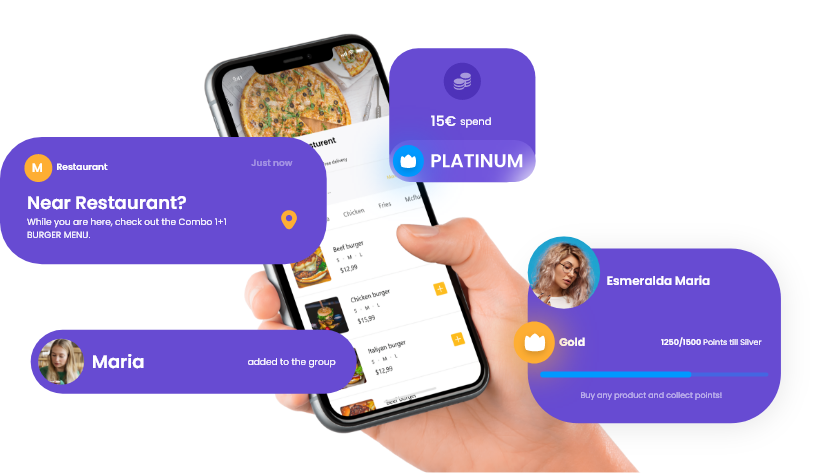
Beyond points and stamps, an effective loyalty method for restaurants is segmenting customers based on their ordering behaviour. The idea is simple: the more often a customer orders, or the more they spend, the more valuable the rewards they access. Not all customers are the same, and the loyalty programme should reflect that.
Concretely, the restaurant can define thresholds based on the number of orders or total amount spent. Each time a threshold is reached, the customer unlocks a reward: a free item added automatically to their cart, a personalised coupon, or access to an exclusive offer. Customers can see at any moment in the app where they currently stand and what they need to do to reach the next level, which keeps motivation active between orders.
The TapTasty segmentation module allows these thresholds to be defined, the associated rewards to be configured, and automatic notifications to be sent to customers who are approaching a new threshold. Combined with a points or stamp programme, segmentation adds a layer of differentiation that rewards the restaurant’s most valuable customers more generously.
How to Choose the Right Method for Your Restaurant
There is no universal loyalty method for restaurants. The choice depends on a few concrete variables.
Visit frequency guides the choice of base format. If customers come weekly or more often, stamp cards work best. If they visit once a month or less, points per spend allow for slower accumulation without a threshold that frustrates.
Average check influences the profitability of rewards. Below $12, stamp cards and a free item as a reward work well. Above $20, points with multiple thresholds and progressive rewards create more engagement.
Communication capacity determines how much of the programme’s potential can be activated. Without customer data and an automated sending system, a loyalty programme runs at half its possible efficiency. A customer who signs up and receives no subsequent message will forget the programme exists.
The type of restaurant guides the complementary methods. A high-volume fast casual benefits from gamification and periodic challenges. A fine dining or casual dining with a loyal base can build on exclusive experiences. A restaurant looking to grow quickly can add referral as an additional layer.
Regardless of format, customer data is the prerequisite for any loyalty method for restaurants. A customer who orders exclusively through aggregators remains anonymous and no loyalty method can reach them. Building your own ordering channel, whether a mobile app, website, or kiosk, is the first step before any loyalty programme. You can read more about the importance of direct channels and customer data in the article on retention on the TapTasty blog.
Conclusion
The landscape of loyalty methods for restaurants has diversified far beyond the classic stamp card. Digital stamps, points per spend, gamification, gift cards, personalised communication, referral, exclusive experiences, and customer segmentation are all valid tools, each suited to different contexts. None is superior in absolute terms.
The most common reason loyalty methods for restaurants fail to deliver is not that the wrong format was chosen, but that continuity is missing: the customer signs up, receives no sign of life, and forgets the programme exists. Automated communication, based on the customer’s real behaviour, is what transforms any loyalty programme from a passive benefit into an active engine for repeat orders.