
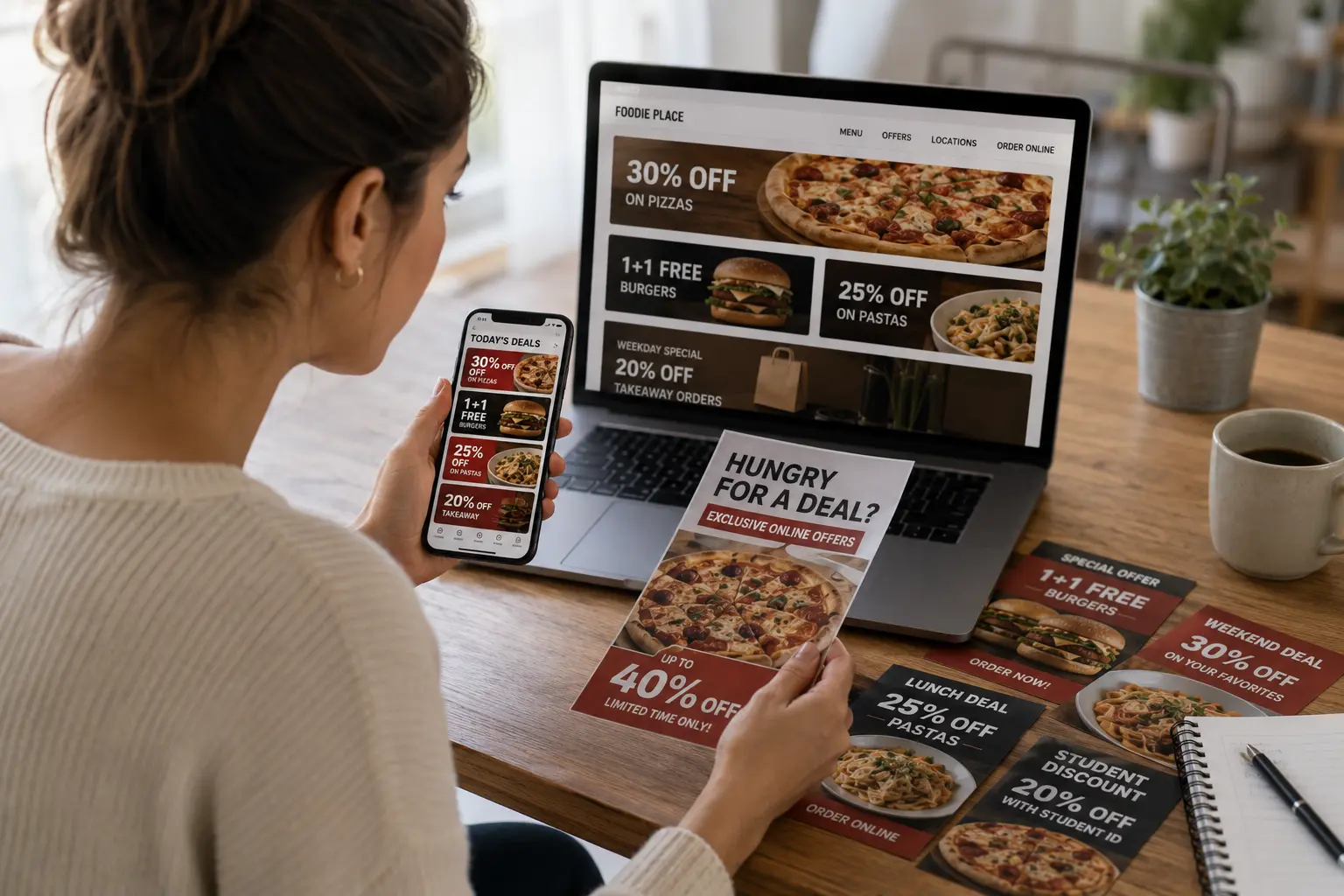
Many restaurants turn to promotions for the same reason: a slower period, a few days with fewer customers, pressure to fill tables or grow online orders. A discount seems like the obvious quick fix. And in the short term, it works. Customers come back, orders go up, the numbers look better.
The problem comes later. Customers who came for the discount are not necessarily loyal customers. Many of them chose to order from you precisely because the price was lower than usual, not because your restaurant was their first choice. When the discount disappears, so, in most cases, do they. And because the slow period returns, the discount returns with it. Gradually, without anyone having consciously planned it, promotions are no longer a tool you use occasionally, but the basic condition through which your restaurant attracts customers.
This article explains why dependence on promotions is costly in the long run, what fuels it, and how to replace it with mechanisms that bring returning customers without eroding your profit margin.
How the Promotion Dependency Cycle Works in a Restaurant
The promotion dependency cycle in a restaurant follows almost always the same pattern. It starts with a tactical, justified promotion, launched to solve a concrete problem: filling a slow service, promoting a new dish, or winning new customers. The promotion attracts traffic. The manager considers it a success.
Shortly after, without a promotion, traffic returns to its previous level or even lower. A customer who came for the discount made a decision based on price, not preference. And a price-based decision changes the moment the price changes. They now know your restaurant offers discounts, and they will simply wait for the next time it happens. If the interval is too long, they will order elsewhere. The restaurant relaunches the promotion, perhaps with a bigger discount to generate the same effect. The cycle is established.
According to the Phygital Index Report 2026, cited by Tillster, 45% of consumers changed their favourite restaurant in the space of a year. The main identified cause was loyalty programmes based on generic discounts, which do not build brand attachment. Dissatisfaction with loyalty programmes in fast food and fast casual nearly doubled, reaching 28% in 2026. Customers do not leave because the food is bad. They leave because no real relationship was ever built, and a better discount from a competitor makes switching very easy.
The Real Cost of a Discount
The visible cost of a discount is simple to calculate: if you offer 15% off a dish priced at $12, you lose $1.80 on that order. Across 100 discounted orders, you lose $180 in margin.
But the invisible cost is often greater. Frequent discounts change how customers perceive the value of your restaurant. A customer who repeatedly buys at 20% off starts to perceive the discounted price as the real price, and the standard price as an artificial markup. When you go back to the normal price, they feel they are being overcharged, not that they are finally paying what is fair. This is one of the ways a brand erodes, and regaining that perception is very difficult.
QSR Magazine notes, drawing on McDonald's experience and industry data, that a perceived value problem cannot be solved with discounts. Consumers respond to promotions in the short term, but long-term loyalty is built on something more fundamental. Discounts can correct an ordering behaviour, but they cannot create an attachment to a restaurant.
Why Discounts Do Not Build Real Loyalty
There is an important psychological distinction between a customer who comes back because the perceived value of your restaurant is high, and one who comes back because they received a discount. As we have noted, the first makes a preference-based decision. The second makes a price-based decision.
Consumer behaviour research confirms that frequent discounts condition a specific type of customer: the deal-hunter. This is not the customer who comes every week regardless of price, but the one who shows up when a promotion is running and disappears when it is not. From the restaurant's perspective, they generate noise in the data (orders go up during promotional periods and drop afterwards), fill seats during those periods when you already have more customers, and add nothing during the normal periods when you actually need the traffic.
Earned rewards, by contrast, create a completely different psychological effect. Attentive 2026, cited by Access Development, reports that 81% of consumers say that visible progress towards a reward is motivating. A customer who is accumulating points and can see they need two more orders to earn a free item makes an active decision to come back. They are not waiting for a discount. They are working towards something.
What Replaces the Discount: Perceived Value
The alternative to discounts is not the absence of any incentive. It is building a perceived value high enough that the customer chooses your restaurant without needing a lower price.
Perceived value is not reducible to food quality, even though that remains the foundation. It includes consistency of experience: the order is right every time, the app works without friction, the delivery arrives within the estimated time. It includes recognising the customer: a customer who has ordered 20 times is treated differently from one ordering for the first time, even if the difference is not always visible but is felt in the communication they receive, the offers they are shown, and the attention paid to their preferences.
Concretely, perceived value is built from details that work consistently: a digital menu updated with clear photographs, orders processed quickly and without errors, relevant notifications sent at the right moment rather than in the middle of the night or during hours when the customer never orders, and communication that shows the restaurant knows who you are. None of this means selling more cheaply. All of it requires, instead, a system that records orders, knows the customer, and enables relevant communication.
This is the territory in which restaurants that have moved beyond promotion dependence operate. They no longer ask the customer to choose based on price, but give them reasons to choose based on the relationship.
Reward Programmes as an Alternative to Discounts
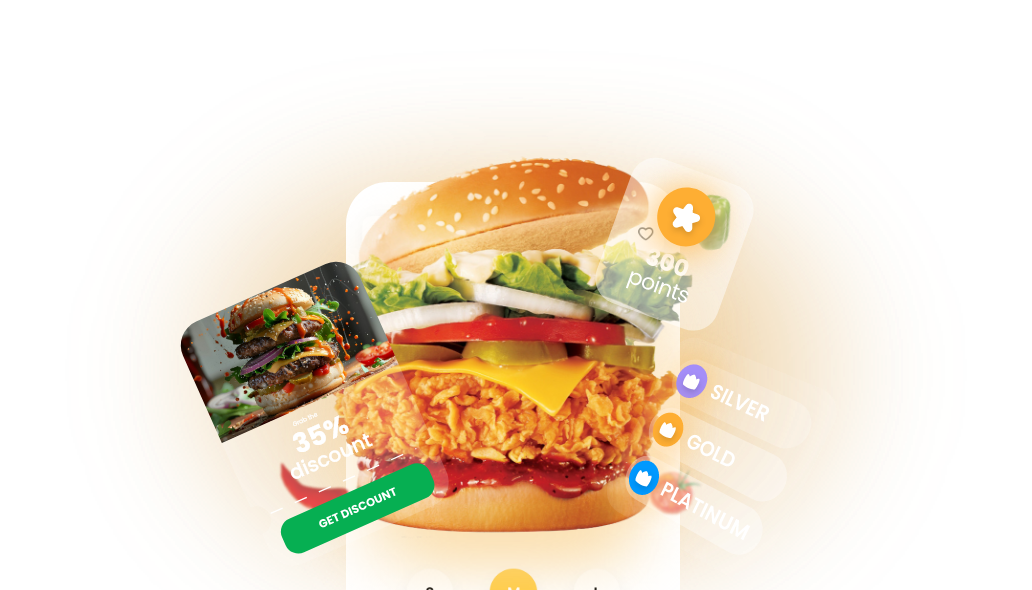
The difference between a discount and an earned reward is more important than it might seem. Both may represent the same financial benefit for the customer, but the psychology behind them is different.
A discount is given. The customer receives it without having done anything special. A reward is earned. The customer has ordered multiple times, accumulated points, reached a threshold. The fact that they worked for the reward creates a sense of deserving it and gives additional value to what they receive. And unlike a discount, the reward does not erode the perception of the standard price, because the standard price was paid with every order.
A points-based loyalty programme can generate significant impact: Chowly reports that loyalty programme members spend 20% more than non-members and visit the restaurant more frequently, creating a revenue predictability that no discount campaign can achieve. The TapTasty loyalty module allows you to configure programmes with points per spend, digital stamp cards, or tiered rewards, available across all of the restaurant's ordering channels.
Segmentation and Personalisation: Promotions That Do Not Create Dependency
Not all promotions are equal in terms of the dependency they generate. A promotion sent to all customers, regardless of their ordering behaviour, creates dependency. A promotion sent to a specific segment, in the right context, has a completely different effect.
An inactive customer who has not ordered in 30 days and receives a personalised reactivation offer does not develop the habit of waiting for discounts. They have received specific attention, based on their particular situation. A customer who has reached an order threshold and receives an exclusive reward does not perceive the standard price as unjustified. They have earned something through their ordering behaviour.
The fundamental difference is targeting. Generic promotions create dependency because everyone sees them and everyone associates them with how your restaurant normally operates. Targeted promotions are invisible to customers who do not receive them, relevant to those who do, and do not change the perception of the brand's value. The TapTasty targeted marketing module allows you to set up automated campaigns based on each customer's behaviour, with configurable days and times for sending, so the right offer reaches the right person without being visible to the rest of the customer base.
How to Calibrate Promotions When You Do Use Them
Moving away from promotion dependence in a restaurant does not mean abandoning promotions entirely. It means changing how you use them. A few principles that prevent the cycle from reinstating itself:
The promotion has a specific purpose and a fixed duration. You do not launch a discount because things are “a bit slow” in general, but because you want to increase orders during a specific time slot or test a new dish. The duration is short and known in advance.
The promotion is not visible to everyone. If a discount is communicated through all channels, to all customers, it becomes part of the brand’s image. Effective promotions are targeted: inactive customers, a specific age segment, customers who viewed a dish without ordering.
The promotion does not repeat at predictable intervals. If customers know there is always a discount on Fridays, or that a coupon arrives every Monday, they will no longer order at any other time without one. Unpredictability is a tool for preventing dependency.
The promotion rewards a behaviour, not a mere presence. “Buy two, get one free” or “First app order with free delivery” reward a specific action. “15% off everything” rewards simply showing up and differentiates nothing.
Conclusion
Promotion dependence in restaurants is not built through a single wrong decision, but through the accumulation of tactically correct short-term decisions that become, over time, an implicit strategy. Exiting it does not happen overnight, but through the gradual replacement of generic discounts with mechanisms that build real relationships with customers.
Perceived value, earned reward programmes, personalised communication, and targeted promotions are not more expensive than generic discounts. In most cases, they are less expensive, because they act on the customers you already have and do not erode the perception of your standard prices. The customer who comes back because your restaurant deserves it is far more valuable in the long run than the customer who comes back because they received a coupon.