
There are two ways to grow a restaurant's revenue: attract more customers or make each existing customer spend more. The first is more visible, more talked about, and usually more expensive. More customers means more ingredients, more staff, and more tables to serve in the same space. The second is often more financially efficient: a 20% increase in average order value translates almost entirely into additional margin, because the restaurant's main fixed costs do not increase along with it.
A restaurant's average order value, also known as the average check, is the average amount a customer spends on a single visit or order. It is a simple indicator to calculate (total revenue divided by number of orders), and one you can influence directly, without changing your base prices and without eroding your margin.
This article covers the main strategies for increasing average order value in a restaurant: from the psychology of digital ordering and menu engineering, to systematic upselling, combo deals, pricing psychology, and personalisation.
Why Customers Spend More When They Order Alone
The most counterintuitive truth about average order value is that a customer who orders without human interaction spends, on average, more than one served by a server or cashier.
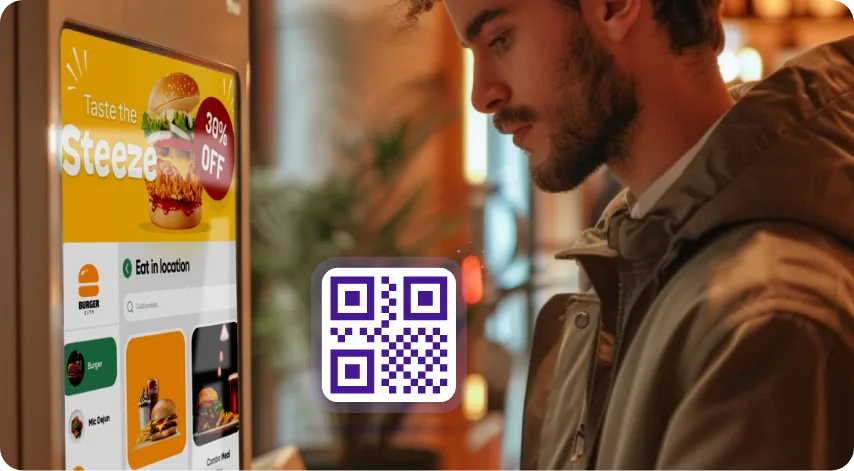
The mechanism is simple and well documented: social pressure. A customer at the counter implicitly feels they need to decide quickly, not keep people waiting behind them, and that ordering too much might seem excessive to the cashier. A customer ordering at a kiosk, through a QR menu, or on a mobile app feels no pressure. They browse at their own pace, explore the options, add dishes they might not have thought of otherwise, and make upgrades without feeling judged.
Industry data shows that restaurants with self-ordering kiosk systems see average order value increases of 15 to 30% compared to traditional counter ordering. A University of Massachusetts Lowell study, cited by MenuTiger, found a 28% increase in the average value of orders placed through kiosks. These are not accidental results, but the direct consequence of removing social pressure from the ordering process.
The TapTasty self-ordering kiosk and the QR table ordering system work on this principle: the customer discovers the menu visually, at their own pace, with no server waiting.
Menu Engineering
A menu is not a list of dishes. It is a sales tool. The way it is organised directly influences what the customer chooses, whether the menu is physical or digital.
Consumer psychology research, including the NetSuite analysis cited by Hubplate, shows that 71% of customers make ordering decisions influenced by the design and placement of dishes on the menu. The eye follows a predictable pattern: the centre of the page, the top right corner, the top left corner. Industry professionals call this zone the “golden triangle.” Dishes placed in these zones receive disproportionately more attention than those at the edges.
The practical implication: the dishes with the highest profit margin should be in the golden triangle, not necessarily the most popular ones. Popularity does not mean profitability. A dish that sells well but with a thin margin contributes less to profit than one that is ordered less frequently but carries a higher margin and is placed strategically.
On digital menus, this logic applies through the order in which dishes appear, through the visual separation of categories, and through labels that attract attention: “Popular,” “Chef’s Recommendation,” “Limited Edition.” These labels guide the choice without forcing anything.
Photographs That Sell
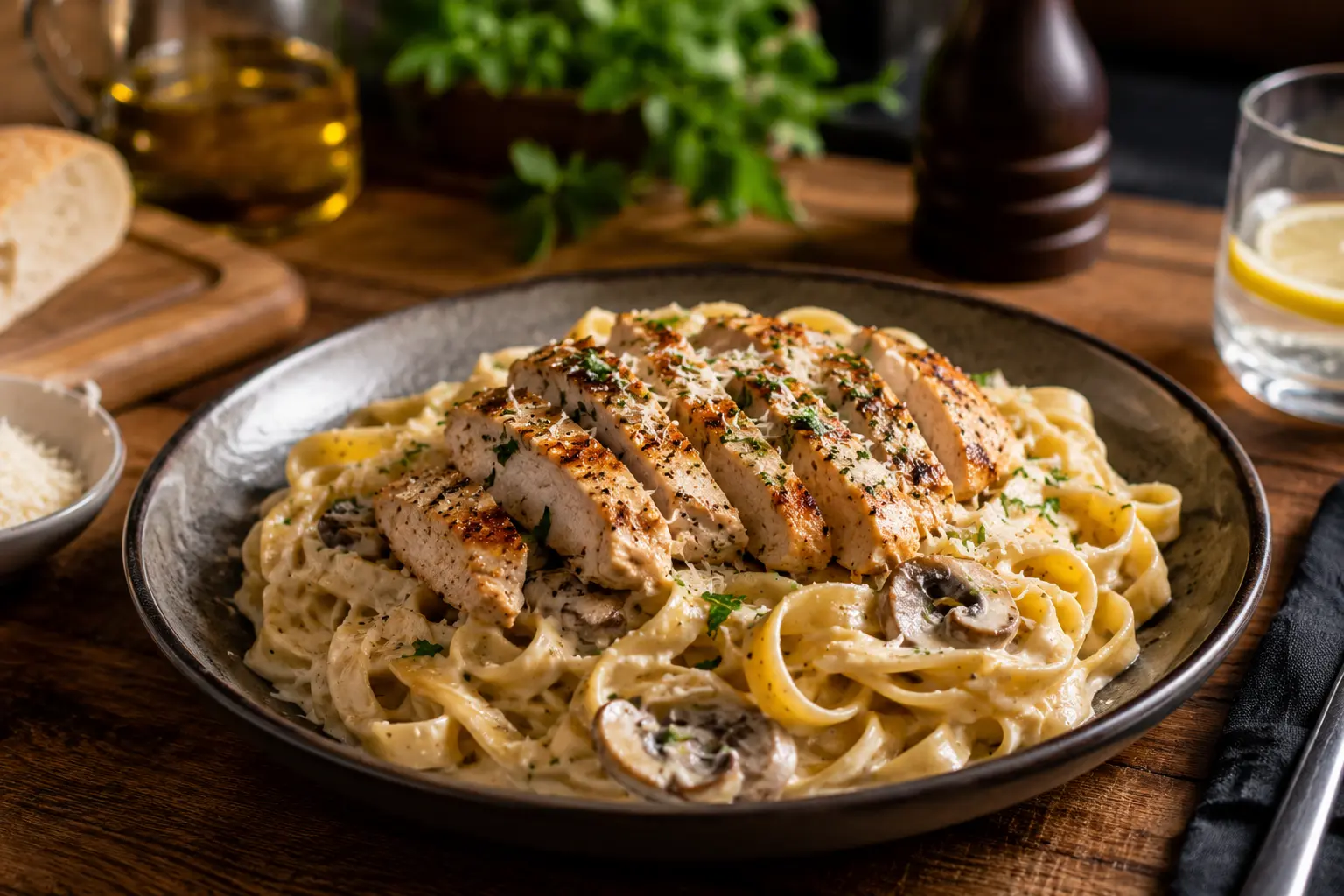
On a physical menu, photographs take up space and cost money to print. On a digital menu, every dish can be accompanied by a quality photograph, and the difference in order rate is significant.
Images are not decorative in the context of digital ordering. They are information. A customer who sees an appetising photograph of a dessert is far more likely to order it than one who reads only “Tiramisu: $5.” The visual triggers the anticipation of pleasure, and that anticipation drives the purchasing decision more effectively than text.
This rule applies equally to photographs on the restaurant’s mobile app or website. Investing in professional photographs of dishes is not a branding cost, but a direct tool for increasing average order value.
Suggestions at the Right Moment
Upselling has existed in restaurants forever. “Would you like a drink with that?” or “I’d recommend adding a salad” are classic techniques. The problem with verbal upselling is inconsistency. A server who is tired after a hectic shift forgets, runs out of energy to suggest, or simply does not prioritise it. Digital systems never forget.
A kiosk or an app can suggest a drink with every food order, a dessert at the end of any main course order, and an add-on for any dish that allows a modification. This consistency makes digital upselling more effective on average than verbal upselling, not because the suggestion is better, but because it is always there.
Digital upselling suggestions work best when they are relevant and contextual. “Add fries to your burger” at the moment a customer selects a burger has a far higher acceptance rate than a generic suggestion at the end of the order. Timing and relevance matter as much as the suggestion itself.
The Perceived Value of Combos and Bundles
A combo does not necessarily mean a discount. It means grouping complementary products into a bundle that simplifies the customer’s decision while also increasing the total order value.
A customer ordering a burger and wondering whether to add a drink makes an explicit calculation: is $2.50 worth it? The same customer who sees the menu and finds “Meal deal: burger + drink + fries, $11 instead of $13 separately” makes a different calculation: I’m saving $2, so yes. The psychological structure of the decision has changed. The customer has moved from “am I spending more?” to “am I saving compared to ordering separately?”
Bundles increase average order value in a restaurant because they turn a single product into a complete experience. The TapTasty promotions and campaigns module allows you to configure combo deals and offers such as “buy one, get one free” or bundles at a special price, available directly in the app, website, or kiosk.
Pricing Psychology
The way prices are written influences the perception of value. A few principles documented in consumer psychology:
Price without the currency symbol. When a price appears without “$” next to it, the customer processes it as an abstract number rather than money being spent. This simple difference reduces the psychological discomfort associated with paying and makes the customer more willing to add items to their order. The individual effect is small, but it accumulates across the dozens of small decisions a customer makes during a meal.
Prices ending in 9. “$10.99” is perceived psychologically as closer to $10 than $11, even though the actual difference from $11 is just $0.01. Prices ending in .9 or .99 are associated with good value and work effectively in casual and fast casual segments.
Price anchoring. Placing a premium dish at a high price next to the dish you want to sell makes the latter seem like a reasonable choice. A burger at $13 next to a wagyu burger at $24 turns the $13 burger from an expensive dish into an accessible one.
Round prices. In full-service restaurants, round prices ($10, $16) are perceived as more premium than prices with decimals. Prices with decimals are associated with calculation and budgeting, not with an enjoyable experience.
Promotions That Grow the Basket, Not Cut the Margin
There is an important difference between promotions that increase average order value in a restaurant and those that simply reduce the price. A straightforward discount of “15% off everything” may increase order volume but erodes the margin without necessarily growing the basket.
“Order over $24 and get free delivery” motivates the customer to add an item to reach the threshold, rather than looking for a discount. “Add a dessert to any order and get 15% off the dessert” grows the basket by the cost of a dessert, at a better margin than a discount across the whole order.
These types of promotions work because they link the reward to a specific customer action. The customer makes an effort, adds something extra, and gets something in return. The perception is of a gain, not a discount. And the restaurant earns a higher order value with a better margin than with generic promotions.
Personalisation Based on Previous Orders
A tool for growing average order value that becomes available once you have your own customer database is personalised suggestions. A customer who has ordered the same burger three times and never a dessert can receive, on their fourth order, a specific suggestion for a new dessert. A customer who always orders without a drink can receive a notification with an offer for a bundle that includes a drink at a special price.
Personalisation works because relevance increases the acceptance rate. A suggestion based on a customer’s real behaviour is perceived as a helpful recommendation, not an advertisement. The TapTasty mobile app enables exactly this type of communication, based on each customer’s order history in the restaurant’s database.
Training Staff for Upselling in Table Service
All of the digital strategies above apply to orders placed through digital channels. But for full-service restaurants where the server takes the order verbally, training the team remains a direct tool for increasing average order value.
Effective upselling does not mean pushing products. It means offering relevant recommendations at the right moment. A server who mentions a wine that pairs well with the chosen dish, or who suggests a dessert after the customer has finished their meal and is visibly satisfied, adds value to the experience. The difference from forced upselling lies in timing, in the tone of the recommendation, and in knowledge of the menu.
A few practical principles: the server knows the new dishes and can talk about them with genuine enthusiasm. The suggestion comes as a personal recommendation, not a sales obligation. No more than one add-on is suggested per table. And the dessert suggestion should always be made, without exception. It is the easiest add-on for a customer to accept, and the one most often forgotten precisely during the busiest hours.
Conclusion
Increasing average order value is not a single action, but a strategy made up of several decisions that influence each other: how the menu looks, where dishes are positioned, how photographs are presented, what suggestions appear at the moment of ordering, how combos are structured, and how staff are trained.
None of these strategies requires more customers. All of them apply to the customers you already have. And the cumulative impact of a few simultaneous improvements can represent a significant increase in revenue without any additional investment in marketing or capacity.
If you would like to implement digital tools in your restaurant to increase your average order value, we invite you to explore TapTasty’s modules and request a personalised quote.